


Grain Snippet: Barley’s Big Crop Meets China’s Waiting Game
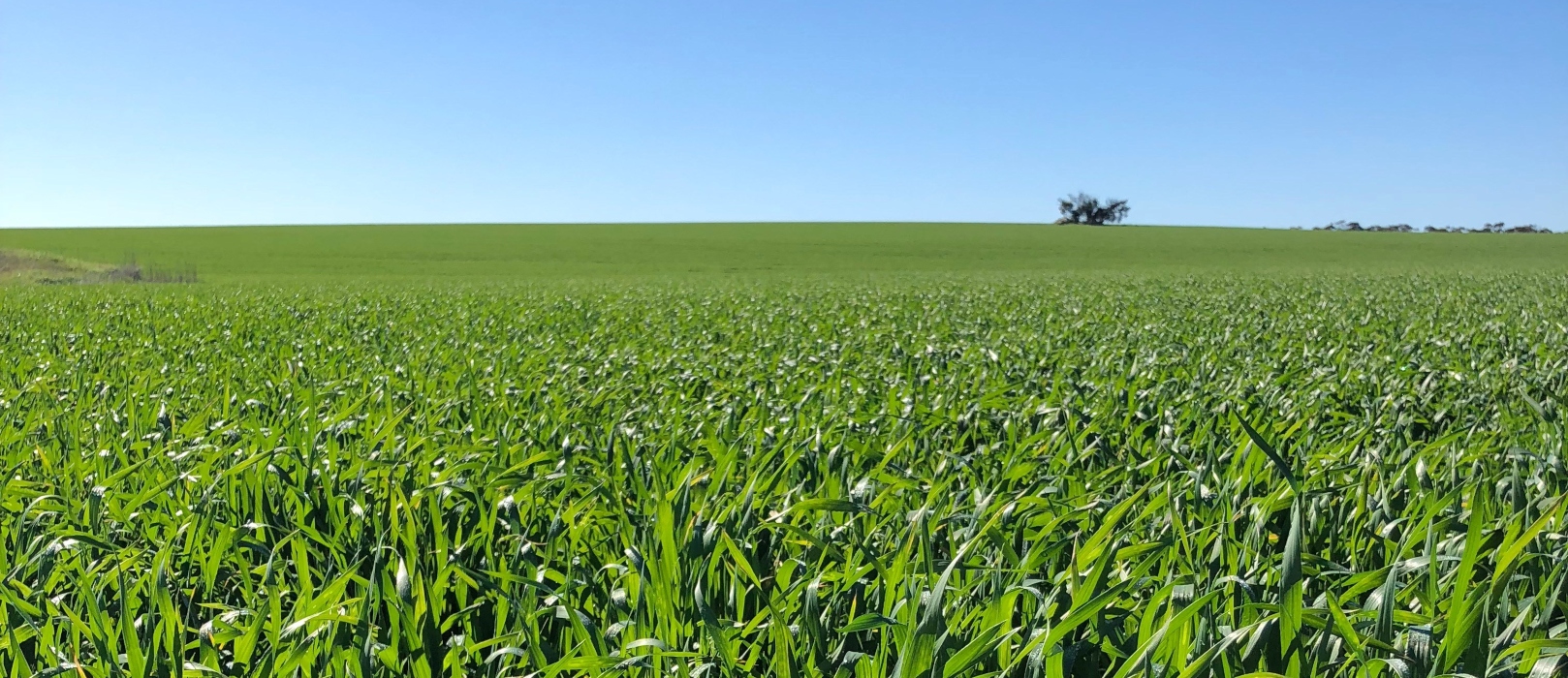
Australia is heading towards a record barley harvest, but supplies are set to meet uncertain export demand and comfortable global stocks. Favourable conditions across SA and VIC have lifted yield expectations, with strong SA yields and increased plantings helping offset production losses in WA and NSW. The latest USDA WASDE report forecasts Australian barley production at a record 17.1 MMT.
WA remains a point of difference, with GIWA forecasting barley production at 6.8 MMT, down from 7.64 MMT last season. Meanwhile, forecast rainfall across eastern Australia could delay harvest and increase grain moisture, creating further uncertainty around quality.
The prospect of substantial supply is weighing on domestic prices. Adelaide BAR1 values fell around A$10–15/MT between late July and early October, with old-crop buying largely drying up as feedlots and mills remained well covered. New-crop buyers have also been patient ahead of harvest. Current BAR1 values are A$262/MT Outer Harbour, A$252/MT Wallaroo and A$258/MT Port Lincoln. With SA and VIC crops well advanced, an early, concentrated harvest could see substantial tonnage entering the market over a short period.
Internationally, WASDE estimates barley production among major exporters at 110.5 MMT, down 2.9 MMT y/y but still 5.3 MMT above the 5-year average. EU barley production is estimated at 52.2 MMT, down 4.2 MMT y/y following dry spring barley conditions. Despite lower production, subdued export demand and large carryover stocks have lifted the major exporters’ stocks-to-use ratio to 12.86%, up 3 percentage points y/y and 2.92 percentage points above the 5-year average.
China remains central to Australia’s export outlook. September barley imports reached 1.09 MMT, taking imports for the 2025/26 October–September marketing year to 14.1 MMT. WASDE forecasts 2026/27 Chinese barley imports at 13 MMT, down 1 MMT y/y but still above the 5-year average of 11.4 MMT.
However, recent Chinese buying interest in Australian barley has been subdued. China’s corn crop is forecast at a record 307 MMT, providing a substantial domestic feed grain alternative. Some industry estimates put Chinese barley imports closer to 10 MMT, 3 MMT below WASDE’s forecast. This divergence highlights uncertainty around the strength of import demand. Australian barley remains competitively priced into China, but fresh enquiry has been intermittent. A weaker AUD has provided some support to export returns, although it has not been enough to offset pressure from Australia’s large crop expectations.
Elsewhere, European feed grain supplies are tightening. France has lowered its 2026 corn crop forecast from an initial 9.1 MMT to 8.1 MMT and now 7.3 MMT, compared with 13.9 MMT last year. This would be the smallest French crop since records began in 1980. The resulting drought premium has supported EU corn futures, in contrast to weaker US corn futures, while Black Sea attacks add further uncertainty around Ukrainian corn exports. Tighter European corn availability could also keep more barley in domestic feed channels.
For Australian barley, the market remains caught between a large harvest, subdued nearby buying and potentially shifting export demand. China’s import pace and harvest quality will be key factors to watch as new-crop supplies enter export channels.
This is a sample only, if you would like to view the entire document and our recommendations, please contact CloudBreak to discuss becoming a member on (08) 8388 8084.