


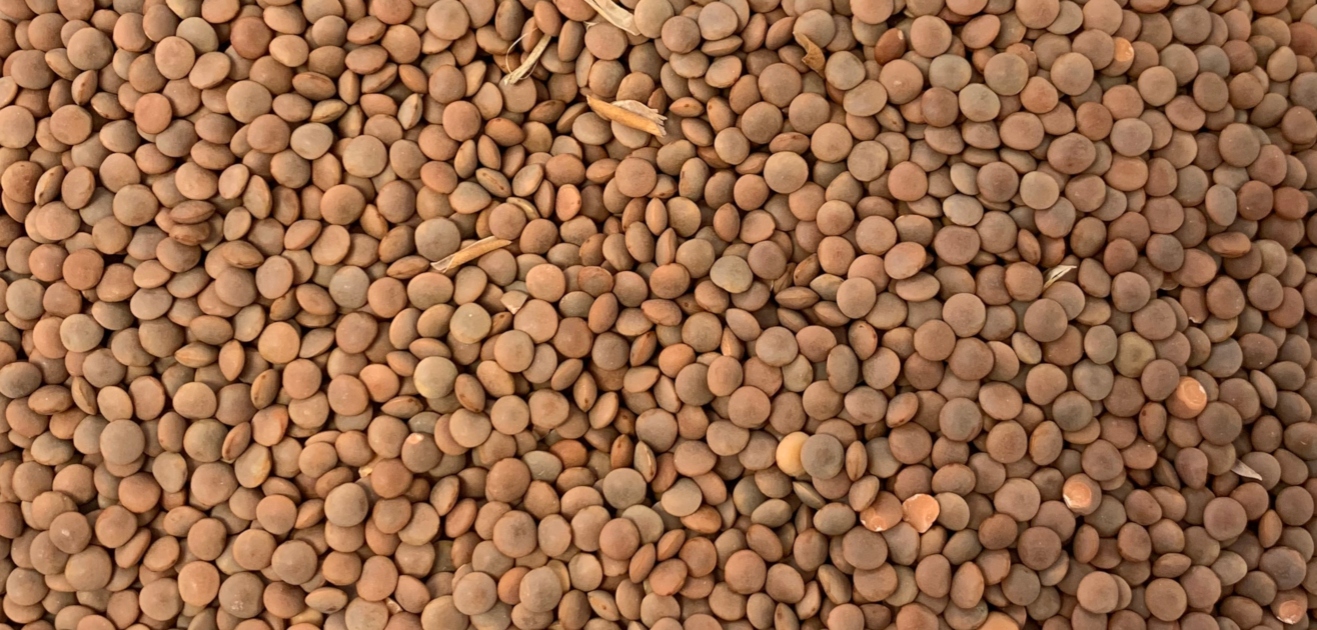
Grain Snippet: Lentil Demand Builds, but Supply Still Dominates
Australian lentil prices have eased modestly in recent days, following a recovery through September and early October. New-crop bids are currently just below A$600/MT delivered Adelaide, with some buyers offering premiums of approximately A$10/MT for post-harvest delivery.
The earlier price recovery was partly driven by a weaker Australian dollar, which accounted for approximately half of the improvement in local bids. The AUD has since recovered modestly, toward 70c technical resistance, removing some of that currency benefit. Increased grower selling and tightening containerised export capacity over the looming harvest period have added further pressure.
Australian lentil prices have eased modestly in recent days, following a recovery through September and early October. New-crop bids are currently just below A$600/MT delivered Adelaide, with some buyers offering premiums of approximately A$10/MT for post-harvest delivery.
The earlier price recovery was partly driven by a weaker Australian dollar, which accounted for approximately half of the improvement in local bids. The AUD has since recovered towards US70c, removing some of that benefit. Modestly increased grower selling and tightening containerised export capacity ahead of harvest have added further pressure.
Internationally, lentil demand remains healthy, particularly from India. Australian exports reached approximately 1.52 MMT between October and August, 57% above the corresponding period last season. India’s lentil imports have also accelerated, reaching approximately 570,000 MT between April and July, up 227% y/y. These figures reinforce the strength of import demand at relatively competitive international prices.
India’s broader pulse market is also experiencing growing production concerns. Below-average monsoon rainfall across important pigeon pea-producing regions has raised expectations of poorer yields, with domestic pigeon pea prices strengthening in recent weeks. Meanwhile, India’s annual food-price inflation accelerated to 7.74% in September, compared with 5.97% in August. Further domestic production losses could increase demand for imported alternatives, including lentils.
However, India’s immediate lentil purchasing activity has softened. Private stockists have increased selling following recent price rallies, while millers remain sluggish on purchases. The Indian government is also holding approximately 4.5 MMT of pulses, including 560,000 MT of lentils. A recent NAFED tender has scheduled further government pulse sales from 14 October. Although such programmes are not unusual, their timing, alongside renewed concerns about food inflation, may be contributing to weaker domestic prices and more cautious buying sentiment.
Elsewhere, logistical constraints affecting Russian yellow pea exports have reduced competition within India’s broader pulse market. This could redirect additional demand towards Canadian peas, potentially accelerating the drawdown of Canadian burdensome inventories.
Meanwhile, Canada’s lentil harvest is effectively complete, with production estimated near 2.47 MMT, approximately 27% below last season. Quality results have been mixed, with only 17% achieving No. 1 grade compared with a ten-year average of 31%. Canadian lentil prices have subsequently recovered towards pre-harvest levels as seasonal selling pressure subsides. Nevertheless, substantial carry-over inventories mean total Canadian supply is estimated to decline by only around 4% y/y.
Australia’s approaching harvest remains the principal source of near-term pressure. Favourable growing conditions have lifted production estimates to between 2.50 and 2.74 MMT, potentially another record crop. Combined with carry-over inventories, total Australian supply could exceed 3 MMT.
For the broader lentil market, strong import activity, recovering Canadian prices and emerging Indian production concerns offer some positive underlying demand signals. While underlying demand appears capable of absorbing considerable volumes at competitive prices, the approaching Australian harvest will test that appetite against another season of abundant supply.
This is a sample only, if you would like to view the entire document and our recommendations, please contact CloudBreak to discuss becoming a member on (08) 8388 8084.