


Grain Snippet: Lentil Prices Hold Steady
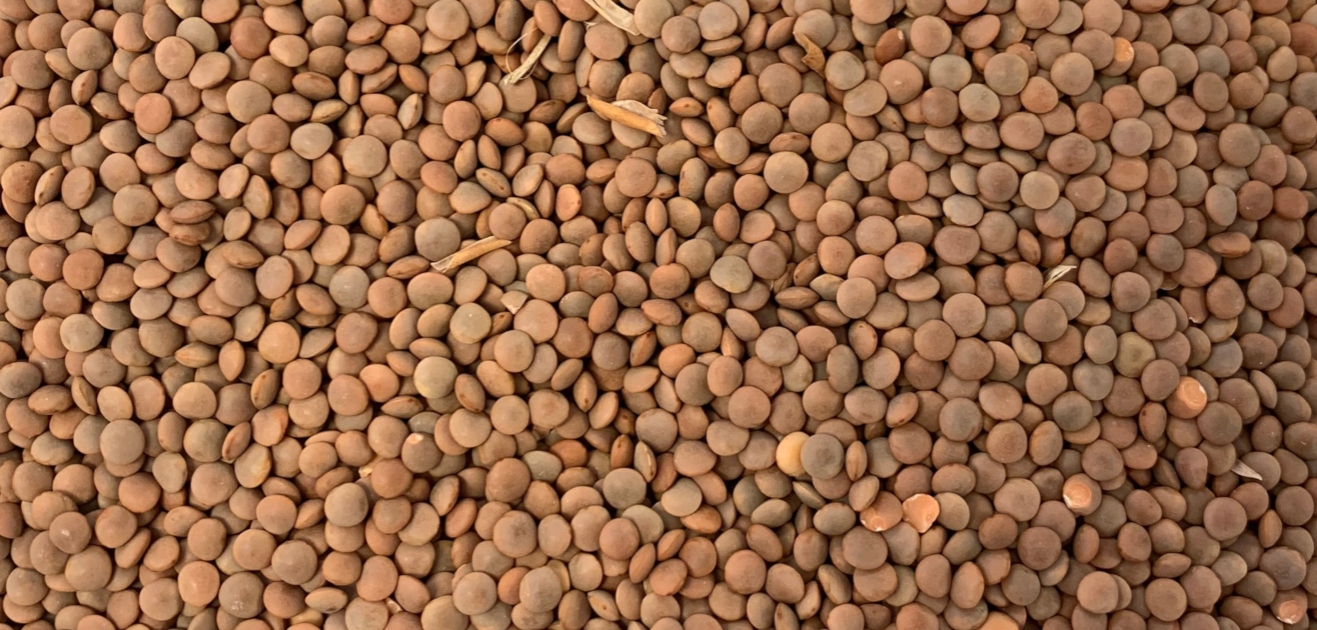
Nipper lentil prices in SA and Vic have steadied around $660-665/MT on a delivered Adelaide/Melbourne basis. This price stability has resisted the high volatility experienced by the Aussie dollar, a facet that would normally see far stronger daily price swings. One of the primary supporting factors for recent lentil prices has been the decline in grower selling liquidity. Compared to the pressures of harvest, selling has become far more moderated, yet exporters continue to work hard to cover bulk commitments, subsequently lending price support.
Fundamentally, the lentil market continues to face headwinds; prices for the season reflect the large global production throughout 25/26. This season brought record-breaking production in Canada (at 3.36MMT, up 38% y/y) and Australia (at ~ 1.9MMT, up 70% y/y), coupled with increased annual production in Russia and Kazakhstan. In their March update, ABARES updated their Australian lentil production to 2MMT making it the largest red lentil in the world (Canada produces both red and greens). It is this burdensome global supply that squashed lentil prices from over $800/MT to the now mid-$600’s.
The low relative pricing for Aussie lentils has helped to encourage demand, with record-breaking exports helping to draw down the large stocks. Both Dec and Jan lentil exports from Australia absolutely eclipsed prior monthly volumes, now totalling roughly 845kMT for the reported shipping season to date (Oct-Jan) according to the ABS. The huge early-season exports could also be indicative of exporters front-ending their program to avoid the potential for increased lentil import duties in India, something that saw higher speculation through Oct/Nov; however, it must be noted this speculation appears to have simmered down now. The pace of exports will be watched with keen interest to help determine subcontinent demand and whether or not Australia’s large forecast carry-out will hold (and cap prices).
India is progressing through its own primary lentil harvest (part of the Rabi crop). Early 2026 saw key lentil-growing regions in India face both increased heat/dryness and abnormal rain events through the months. Despite the localised extremes, overall the yield expectations are good and total lentil production is forecast to be about 5% higher y/y putting the crop size at 1.73-1.75MMT. The Indian government has agreed to purchase 100% of domestically produced lentils at their minimum support price (MSP) – to that end there is incentive for the import duties to be raised to meet this similar level. Realistically, buying 100% of the crop is not logistically possible; but the fact that the MSP sits well above imported lentils leads to ongoing questions over the potential for duties in 2026.
Meanwhile, changes to pulse trade flows have been beneficial. China has agreed to remove the 100% pea import duty previously imposed on Canada. This will help the broader pulse price complex whilst easing the supply pressure into India. There has been some consumer-driven panic buying of staple foods in the UAE, which includes lentils. Demand for lentils has increased there, but its logistically hampered by increased freight insurance costs coupled with risk of cancellations from shipping lines.
This is a sample only, if you would like to view the entire document and our recommendations, please contact CloudBreak to discuss becoming a member on (08) 8388 8084.